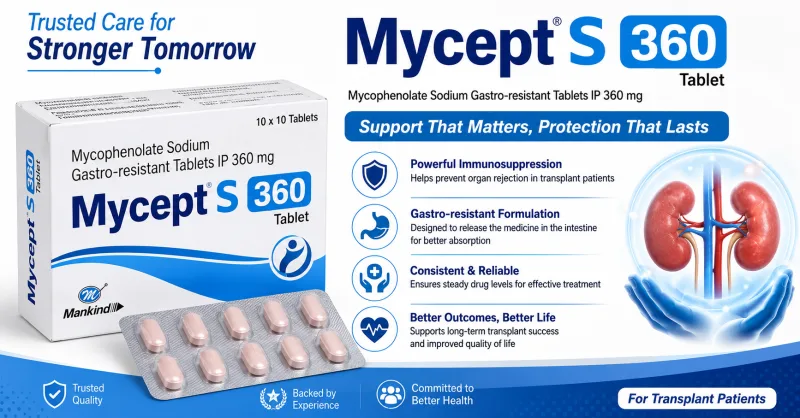
Mycept S 360 Tablet is a prescription immunosuppressant medicine manufactured by Mankind Pharma Ltd. It contains Mycophenolate Sodium 360 mg, which helps reduce the activity of the immune system to prevent the body from rejecting a transplanted organ, especially a kidney. It is usually prescribed along with other immunosuppressive medicines such as tacrolimus and corticosteroids to provide long-term protection after organ transplantation.
Because this medicine suppresses the immune system, it must be taken exactly as directed by the transplant specialist. Regular blood tests and medical follow-up are essential to monitor its effectiveness and detect possible side effects early. This guide explains everything you need to know about Mycept S 360 Tablet, including its uses, dosage, precautions, side effects, and important safety advice.
What is Mycept S 360 Tablet?
Mycept S 360 Tablet contains Mycophenolate Sodium, an immunosuppressive medicine that decreases the activity of certain white blood cells responsible for attacking transplanted organs.
After an organ transplant, the body's immune system naturally recognizes the new organ as foreign and attempts to destroy it. Mycept S 360 Tablet helps prevent this immune response, significantly reducing the risk of organ rejection and improving long-term transplant success.
It is not a cure but an essential part of lifelong transplant management.
How Does Mycept S 360 Tablet Work?
Mycophenolate Sodium blocks an enzyme called inosine monophosphate dehydrogenase (IMPDH).
This enzyme is necessary for the growth of T and B lymphocytes, the immune cells mainly responsible for transplant rejection.
By reducing the production of these immune cells, the medicine helps:
- Prevent kidney transplant rejection
- Reduce immune attack on the transplanted organ
- Improve graft survival
- Maintain healthy kidney function
Uses of Mycept S 360 Tablet
Doctors commonly prescribe Mycept S 360 Tablet for:
- Prevention of kidney transplant rejection
- Long-term immunosuppressive therapy after transplantation
- Combination therapy with tacrolimus or cyclosporine
- Maintenance of transplanted kidney function
In some cases, specialists may prescribe it for certain autoimmune disorders when clinically appropriate.
Benefits of Mycept S 360 Tablet
Some important benefits include:
- Helps prevent transplant rejection
- Protects transplanted kidney function
- Reduces immune system overactivity
- Improves long-term transplant success
- Works well with other anti-rejection medicines
- Suitable for long-term maintenance therapy under specialist supervision
Who Should Take Mycept S 360 Tablet?
It is generally prescribed for:
- Adults after kidney transplantation
- Selected pediatric transplant patients as advised by specialists
- Patients requiring long-term immunosuppressive therapy
It should never be started without the recommendation of a transplant physician.
Dosage and Administration
Take the medicine exactly as prescribed.
General recommendations include:
- Swallow the tablet whole.
- Do not crush, chew, or break it.
- Take it on an empty stomach whenever possible.
- Take it at the same time every day.
- Continue treatment even if you feel well.
- Never stop treatment without consulting your transplant specialist.
Missing doses may increase the risk of transplant rejection.
Possible Side Effects
Like all medicines, Mycept S 360 Tablet may cause side effects.
Common side effects include:
- Diarrhea
- Nausea
- Vomiting
- Abdominal pain
- Headache
- Fatigue
- Increased risk of infections
Serious side effects requiring immediate medical attention include:
- High fever
- Persistent sore throat
- Unusual bruising
- Bleeding
- Severe skin rash
- Difficulty breathing
- Blood in urine
- Severe abdominal pain
Drug Interactions
- Tell your healthcare provider if you take:
- Antacids
- Cholestyramine
- Tacrolimus
- Cyclosporine
- Live vaccines
- Azathioprine
- Certain antibiotics
Never start or stop medicines without consulting your transplant specialist.
Monitoring During Treatment
- Doctors usually recommend:
- Complete blood count (CBC)
- Kidney function tests
- Liver function tests
- Blood pressure monitoring
- Infection screening
- Routine transplant evaluation
- Regular monitoring helps ensure the medicine remains both safe and effective.
Storage Instructions
- Store the tablets:
- At room temperature
- Away from moisture
- Away from direct sunlight
- In the original blister pack
- Out of reach of children
FAQs
Can Mycept S 360 Tablet cure kidney disease?
- No. It helps prevent rejection after a kidney transplant but does not cure kidney disease.
Can I stop taking it once I feel healthy?
- No. Stopping suddenly can lead to organ rejection.
Does it weaken immunity?
- Yes. It intentionally suppresses part of the immune system to protect the transplanted organ.
Can I receive vaccines while taking Mycept S 360 Tablet?
- Avoid live vaccines unless your transplant doctor specifically recommends them.
What should I do if I miss a dose?
- Take it as soon as you remember unless it is nearly time for the next dose. Never take two doses together.
References
- MedlinePlus – Mycophenolate Drug Information – U.S. National Library of Medicine. Comprehensive information on mycophenolate, including uses, dosage, precautions, side effects, and safety recommendations.
- DailyMed – Mycophenolate Prescribing Information – Official FDA-approved prescribing information, including boxed warnings, indications, contraindications, and prescribing details.
- DailyMed – Mycophenolate Consumer Drug Label – Official drug labeling and medication information provided by the U.S. National Library of Medicine.
Medical Disclaimer
The information provided in this article is intended for educational and informational purposes only and should not be considered a substitute for professional medical advice, diagnosis, or treatment. Mycept S 360 Tablet (Mycophenolate Sodium) is a prescription immunosuppressant medicine that should only be used under the supervision of a qualified healthcare professional or transplant specialist. Never start, stop, or change the dosage of this medicine without consulting your doctor. If you experience severe side effects, signs of infection, allergic reactions, or any unusual symptoms while taking this medicine, seek immediate medical attention. Always follow your physician's recommendations and refer to the official prescribing information before using any prescription medication.