Introduction
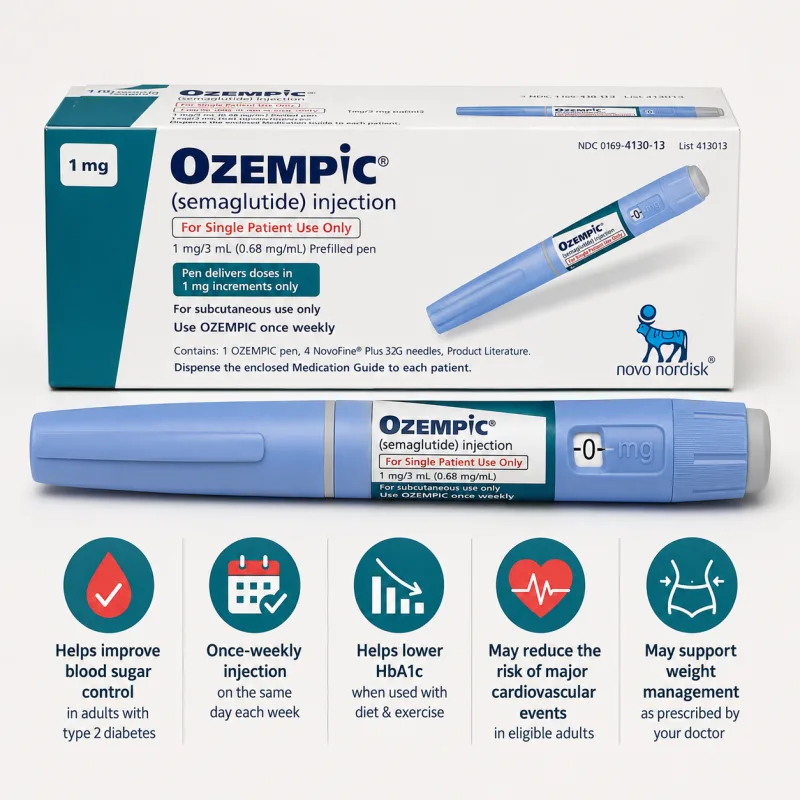
Ozempic 1mg Injection is a prescription medicine containing Semaglutide, a glucagon-like peptide-1 (GLP-1) receptor agonist used to improve blood sugar control in adults with Type 2 Diabetes Mellitus. It is administered as a once-weekly injection and works alongside a healthy diet and regular exercise to help maintain optimal glucose levels.
Managing type 2 diabetes is important because uncontrolled blood sugar can increase the risk of complications such as heart disease, kidney disease, nerve damage, vision problems, and stroke. Ozempic helps improve glycemic control and has also been shown to reduce the risk of certain cardiovascular events in eligible adults with type 2 diabetes.
Unlike insulin, Ozempic works by helping the body release insulin only when blood sugar levels are elevated. It also slows stomach emptying and reduces the amount of glucose produced by the liver after meals.
This guide explains everything you need to know about Ozempic 1mg Injection, including its uses, benefits, dosage, side effects, precautions, storage instructions, frequently asked questions, and more.
Looking for diabetes medicines? Explore the Diabetes Care Collection or browse Ozempic and Diabetes Medicines at Prime1mg.
What is Ozempic 1mg Injection?
Ozempic 1mg Injection contains Semaglutide, a GLP-1 receptor agonist that mimics a naturally occurring hormone in the body. This hormone helps regulate blood sugar by stimulating insulin release when blood sugar is high, reducing glucagon secretion, and slowing gastric emptying.
The medicine is intended for adults with Type 2 Diabetes Mellitus and should be used together with proper nutrition, physical activity, and other diabetes management strategies as recommended by a healthcare professional.
Ozempic is not indicated for Type 1 diabetes or diabetic ketoacidosis.
Uses of Ozempic 1mg Injection
- Improves blood sugar control in adults with Type 2 Diabetes.
- Used along with diet and regular exercise.
- Helps lower HbA1c levels.
- Reduces the risk of major cardiovascular events in eligible adults with type 2 diabetes and established cardiovascular disease.
- May help eligible patients manage body weight when prescribed by a healthcare professional.
- Supports long-term diabetes management.
- Helps reduce post-meal blood sugar spikes.
- Can be used alone or with other diabetes medicines when advised by a doctor.
Benefits of Ozempic 1mg Injection
- Once-weekly dosing for convenience.
- Improves long-term blood sugar control.
- Helps reduce HbA1c.
- Supports healthy glucose regulation.
- May reduce appetite in some patients.
- Helps lower post-meal glucose levels.
- Can reduce cardiovascular risk in eligible adults.
- May contribute to modest weight reduction when prescribed appropriately.
- Easy-to-use prefilled injection pen.
Composition / Active Ingredient
- Semaglutide 1mg
How Ozempic 1mg Injection Works
Ozempic works by acting like the body's natural GLP-1 hormone. It stimulates insulin release only when blood sugar levels are high, helping reduce the risk of low blood sugar when used alone. It also decreases glucagon secretion, slows stomach emptying, and helps reduce appetite, which together improve blood sugar control.
Because it slows digestion, many patients feel full for longer after meals. However, Ozempic should only be used for the conditions and indications approved by a healthcare professional.
Who Can Use Ozempic?
- Adults diagnosed with Type 2 Diabetes.
- Patients who require additional blood sugar control.
- Individuals prescribed a GLP-1 receptor agonist by their doctor.
- Patients requiring weekly injectable diabetes therapy.
Not recommended for:
- Type 1 Diabetes.
- Diabetic ketoacidosis.
- Patients with hypersensitivity to Semaglutide.
- Individuals with certain thyroid conditions as advised by a healthcare professional.
Important Safety Information
- Use only under medical supervision.
- Do not share injection pens with others.
- Monitor blood sugar regularly.
- Follow your prescribed diet and exercise plan.
- Continue treatment exactly as directed.
- Do not change the dose without consulting your doctor.
Related Diabetes Care Products
- Diabetes Care Products
- Semaglutide Medicines
- Blood Glucose Monitoring Products
How to Use Ozempic 1mg Injection
- Always use Ozempic 1mg Injection exactly as prescribed by your healthcare professional. It is administered once every week on the same day each week, with or without food. Your doctor may start treatment with a lower dose before increasing it to improve tolerability.
Steps to Use Ozempic Injection
- Wash your hands thoroughly before handling the injection pen.
- Inspect the solution; it should be clear and colorless.
- Attach a new sterile needle before each injection.
- Select the prescribed dose using the dose selector.
- Inject under the skin of the abdomen, thigh, or upper arm.
- Rotate injection sites every week to reduce skin irritation.
- Dispose of the used needle safely after each injection.
- Never inject Ozempic into a vein or muscle.
Recommended Dosage
- The dosage of Ozempic depends on your doctor's recommendation and your body's response to treatment.
- Usually started with a lower dose.
- The dose may gradually increase to 1mg once weekly.
- Take the injection on the same day every week.
- Do not change your dosage without medical advice.
- If you miss a scheduled injection, follow your doctor's instructions.
Possible Side Effects
- Like all medicines, Ozempic may cause side effects, although not everyone experiences them.
Common Side Effects
- Nausea
- Vomiting
- Diarrhea
- Constipation
- Abdominal pain
- Loss of appetite
- Indigestion
- Bloating
- Burping
- Injection site discomfort
Serious Side Effects
- Severe allergic reaction
- Pancreatitis (severe abdominal pain)
- Gallbladder problems
- Kidney function changes due to dehydration
- Vision changes in people with diabetic retinopathy
- Low blood sugar when used with insulin or sulfonylureas
- Seek immediate medical attention if you develop severe abdominal pain, swelling of the face, difficulty breathing, or persistent vomiting.
Warnings & Precautions
- Use only with a valid prescription.
- Inform your doctor if you have pancreatitis or gallbladder disease.
- Tell your doctor if you have kidney disease.
- Discuss any history of diabetic eye disease.
- Inform your healthcare provider if you are pregnant, planning pregnancy, or breastfeeding.
- Monitor blood sugar regularly during treatment.
- Stay hydrated, especially if experiencing vomiting or diarrhea.
- Do not share your injection pen with anyone.
- Keep all follow-up appointments with your doctor.
Drug Interactions
- Inform your healthcare professional if you are taking:
- Insulin
- Sulfonylurea medicines
- Other GLP-1 receptor agonists
- Oral diabetes medicines
- Blood pressure medicines
- Prescription medicines
- Over-the-counter medicines
- Herbal supplements
- Vitamin supplements
Storage Instructions
- Store unopened pens in a refrigerator at 2°C to 8°C.
- Do not freeze the medicine.
- Protect from direct sunlight and excessive heat.
- After first use, store as directed in the product instructions.
- Keep out of reach of children.
- Do not use expired medicine.
Missed Dose
- If you miss a dose and it has been 5 days or less, take it as soon as possible. If more than 5 days have passed, skip the missed dose and take your next scheduled dose. Do not take two doses together.
Overdose
- An overdose may increase the risk of severe nausea, vomiting, dehydration, and low blood sugar (especially with other diabetes medicines). Contact your doctor or seek emergency medical care immediately if an overdose is suspected.
Frequently Asked Questions (FAQs)
1. What is Ozempic 1mg Injection used for?
- It is prescribed to improve blood sugar control in adults with Type 2 Diabetes along with diet and exercise.
2. Is Ozempic an insulin?
- No. Ozempic contains semaglutide, a GLP-1 receptor agonist, and is not insulin.
3. How often is Ozempic taken?
- It is injected once every week on the same day each week.
4. Can Ozempic cure diabetes?
- No. It helps manage Type 2 Diabetes but does not cure the condition.
5. Can I take Ozempic with insulin?
- Only if prescribed by your healthcare provider, as dose adjustments may be required.
6. Can Ozempic cause weight loss?
- Some patients may experience weight reduction during treatment, but the medicine should only be used for approved indications and as prescribed by a healthcare professional.
7. Is Ozempic safe during pregnancy?
- Talk to your doctor if you are pregnant, planning pregnancy, or breastfeeding before using this medicine.
8. Can I drink alcohol while using Ozempic?
- Alcohol may affect blood sugar levels. Discuss alcohol consumption with your healthcare provider.
9. What should I do if I miss my injection?
- Take it within 5 days if possible. Otherwise, skip the missed dose and continue your regular schedule.
10. Where should Ozempic be injected?
- It can be injected under the skin of the abdomen, thigh, or upper arm.
11. Can Ozempic be used for Type 1 Diabetes?
- No. Ozempic is not indicated for Type 1 Diabetes.
12. Can I stop Ozempic once my blood sugar improves?
- Do not stop treatment without consulting your doctor.
13. Does Ozempic require refrigeration?
- Yes. Store unopened pens in a refrigerator as directed.
14. Can Ozempic be used with other diabetes medicines?
- Yes, but only under medical supervision.
15. Is Ozempic a prescription medicine?
- Yes. It should only be used under the guidance of a qualified healthcare professional.
Conclusion
- Ozempic 1mg Injection (Semaglutide) is a once-weekly prescription medicine that helps adults with Type 2 Diabetes improve blood sugar control when used alongside a healthy diet and regular exercise. It may also reduce the risk of certain cardiovascular events in eligible patients. Because it is a prescription medicine, it should only be used under the supervision of a qualified healthcare professional. Regular blood sugar monitoring, adherence to the prescribed treatment plan, and routine follow-up appointments can help achieve the best outcomes.
- Explore more Diabetes Care Products and other prescription medicines at Prime1mg.
References
- Ozempic (Official Website)
- U.S. Food and Drug Administration (FDA)
- American Diabetes Association (ADA)
- MedlinePlus – Drug Information
- Prime1mg – Diabetes Care Collection