Let's get something straight right up front: erectile dysfunction doesn't say anything about who you are as a man. It's a medical condition - one of the most common ones men face - and it's also one of the most treatable. But despite how widespread it is, ED still gets wrapped in silence, shame, and more misinformation than any medical condition deserves.
This guide cuts through all of that. No vague reassurances, no miracle promises, no dancing around the topic. Just a straight, evidence-based breakdown of what erectile dysfunction actually is, what causes it, how doctors diagnose it, and what treatments genuinely work - written for people who want real information, not feel-good fluff.
Everything here pulls from peer-reviewed research and established clinical guidelines - sources like the Cleveland Clinic, Harvard Medical School, and the European Association of Urology. Every major claim has a citation attached.
What Is Erectile Dysfunction, Exactly?
Erectile dysfunction - commonly called ED, or what older textbooks labeled impotence - is the persistent inability to get or keep an erection firm enough for satisfying sex [1].
The word "persistent" matters. Every guy, at some point, has a night where things just don't cooperate - too stressed, too tired, too much to drink, bad timing. That's normal. That's not ED. The condition becomes a real medical concern when it happens consistently over weeks or months and starts affecting your sex life or your mental health.
ED isn't one-size-fits-all either. Some men can get an erection but can't hold it. Others get partial firmness that isn't enough for penetration. Some lose the ability entirely. And plenty of guys deal with an inconsistent pattern - some nights are fine, others aren't - which can actually be the most frustrating version, because there's no predictable pattern to work with.
The Four Types of ED
Not all erectile dysfunction has the same root cause. Clinicians generally sort it into four categories [1]:
- Vascular ED: The most common type. It involves problems with the blood vessels that deliver blood to the penis or the valves that trap blood inside to maintain firmness. Conditions like atherosclerosis, high blood pressure, and diabetes are the usual culprits.
- Neurogenic ED: Caused by damage to the nerves that carry signals between the brain and the penis. This can result from spinal cord injuries, pelvic surgery (especially prostate surgery), stroke, or conditions like multiple sclerosis.
- Hormonal ED: Linked to hormonal imbalances - most commonly low testosterone, but also thyroid disorders. Testosterone plays a direct role in opening blood vessels and facilitating blood flow to the penis.
- Psychogenic ED: Rooted in psychological factors - stress, anxiety, depression, relationship problems, or performance fear. The brain is, after all, the most important sexual organ. When it's working against you, the body follows.
In practice, most cases of ED involve a combination of these factors. A guy with mildly reduced blood flow might do just fine until work stress tips the balance. The physical and psychological components feed each other - which is exactly why a proper evaluation matters.
How Common Is ED? More Than You Think
If you're dealing with this, here's the most important thing to hear right now: you're not unusual.
The Massachusetts Male Aging Study (MMAS) - the largest and most cited study on male sexual health ever conducted - found that 52% of men between the ages of 40 and 70 experience some degree of erectile dysfunction. Complete inability to achieve an erection affects around 10% overall, climbing from 5% at age 40 to 15% by age 70 [2].
Younger men aren't off the hook either. A 2013 study in the Journal of Sexual Medicine found that roughly 26% of men under 40 seen in outpatient clinics reported erectile difficulties - a number that surprised researchers and pushed back hard against the idea that ED is strictly an older man's problem [3].
And here's a number that should bother all of us: research suggests that only about one in four men with erectile dysfunction ever actually sees a doctor about it [4]. Three quarters are dealing with it - or more accurately, not dealing with it - entirely on their own.
ED is common. It's not a character flaw. And suffering through it in silence is a choice - and an increasingly unnecessary one.
What Does ED Actually Look and Feel Like?
The medical definition is clean and simple, but the lived experience is messier than most clinical descriptions let on. Men with ED typically describe one or more of the following [1]:
- Inconsistent erections: Getting an erection some of the time but not reliably - often called "hit or miss," which creates its own anxiety because there's no pattern to predict.
- Difficulty maintaining: Getting an erection at first but losing it during sex, especially when changing positions or when focus shifts.
- Reduced firmness: Getting some degree of erection but not enough for penetration. Men often describe it as "partial" or "soft."
- Complete inability: No erection at all, regardless of stimulation or arousal.
- Needing excessive stimulation: Requiring far more prolonged or specific stimulation than before to get or maintain an erection.
- Fewer spontaneous erections: A drop in morning erections or nighttime erections - which can actually point toward a physical rather than psychological cause.
There's also a symptom that rarely makes it into medical write-ups but practically every man with ED knows well: the anticipatory dread. The anxiety about whether things will work kicks in hours - sometimes days - before a sexual encounter. By the time the moment actually arrives, the nervous system is already running hot. That makes failure more likely, which only feeds more anxiety the next time.
That's not weakness. That's biology. And it's worth recognising it for exactly what it is.
Why Does ED Happen? The Real Causes
This is where most articles oversimplify. ED almost never has a single cause. It's almost always the result of overlapping factors - and understanding them matters, because the right treatment depends on the right diagnosis.
Physical Causes
The most common causes of ED are physical, and they almost always trace back to the cardiovascular system. An erection depends on a precise chain of events: arousal triggers nerve signals, blood vessels in the penis relax and expand, blood flows in and fills the erectile tissue, then valves close to trap it there. Break any link in that chain - blood flow, nerve signals, valve function - and you've got a problem [1].
The conditions most frequently linked to ED include:
- Cardiovascular disease and atherosclerosis: Narrowed or hardened arteries restrict blood flow everywhere - including to the penis. ED is now recognized by both the American Heart Association and NICE as a potential early warning sign of cardiovascular disease, often showing up two to five years before a cardiac event [5][6]. In up to 30% of cases, erectile difficulty is the first clinical indicator of underlying vascular disease.
- Diabetes: Both Type 1 and Type 2 diabetes damage blood vessels and nerves over time. Men with diabetes are two to three times more likely to develop ED than men without it, and it often shows up at a younger age [7].
- High blood pressure: Hypertension damages the lining of blood vessels and reduces their ability to dilate - which is the exact mechanism an erection depends on.
- High cholesterol: Contributes to plaque buildup in the arteries, cutting blood flow further.
- Obesity: Harvard Medical School data shows men with a 42-inch waist are 50% more likely to experience ED than men with a 32-inch waist, at any age [8]. Excess body fat also suppresses testosterone production.
- Low testosterone: Testosterone doesn't directly trigger erections, but it's critical for sexual desire and for keeping penile tissue healthy. Levels naturally decline around 1% per year after 30 - and a significant drop affects erectile function noticeably [9].
- Neurological conditions: Multiple sclerosis, Parkinson's disease, spinal cord injuries, and stroke can all disrupt the nerve pathways required for erection.
- Peyronie's disease: Scar tissue inside the penis can cause curvature, pain, and trouble getting or maintaining an erection.
- Prostate surgery and pelvic radiation: Treatments for prostate, bladder, or colon cancer can damage the nerves and blood vessels that erections depend on.
Medications That Can Cause or Worsen ED
This one gets overlooked more than it should. A significant number of commonly prescribed drugs list erectile dysfunction as a known side effect [1]:
- Blood pressure medications - particularly beta-blockers and thiazide diuretics
- Antidepressants - especially SSRIs like sertraline and fluoxetine
- Anti-anxiety medications
- Antihistamines
- Prostate medications - including finasteride and dutasteride
- Opioid painkillers
- Chemotherapy drugs
- Antiseizure medications
If you think a medication might be contributing, don't stop taking it on your own. In a lot of cases, there's an alternative drug or a dosage adjustment that can fix the issue without compromising your other treatment.
Lifestyle and Substance Factors
Some of the most powerful contributors to ED are things you actually have some control over:
- Smoking: Tobacco damages blood vessel walls and speeds up atherosclerosis. Smokers are roughly twice as likely to develop ED as non-smokers [8]. The upside: men with mild ED who quit often see real improvement within a few months.
- Heavy drinking: A drink or two may lower inhibitions, but regular heavy alcohol use depresses the central nervous system, disrupts hormone levels, and causes long-term vascular damage.
- Recreational drugs: Cocaine, amphetamines, marijuana, and opioids all impair erectile function through different mechanisms - from blood vessel constriction to hormonal disruption.
- Sitting too much: Physical inactivity is an independent risk factor for ED. It contributes to poor cardiovascular health, weight gain, and lower testosterone.
Psychological Causes
Sexual arousal starts in the brain. If something's interfering with that process, nothing else downstream is going to work right - no matter how healthy everything else is.
- Performance anxiety: The most common psychological cause. One bad experience creates fear of the next one, which makes failure more likely, which creates more fear. Sex therapists call this the performance anxiety cycle - and it can be incredibly hard to break without help [10].
- Stress: Chronic stress - work, money, family, health - keeps the sympathetic nervous system activated. That's the fight-or-flight system. It constricts blood vessels and shunts resources away from sexual function. Erections need the opposite state: parasympathetic calm and relaxation.
- Depression: Depression and ED reinforce each other in both directions. Depression reduces libido, dampens the arousal response, and is often treated with SSRIs - which can themselves make ED worse.
- Relationship problems: Unresolved conflict, lack of emotional closeness, poor communication, built-up resentment - all of it can show up as sexual dysfunction. The body has a way of being honest about the state of a relationship even when words aren't.
Most ED involves both physical and psychological components. A man with slightly reduced blood flow may function fine until anxiety tips the scale. Treating only one side rarely gets the full result.
ED as an Early Warning Sign
Erectile dysfunction isn't just a sexual health issue. It's increasingly recognised as a cardiovascular red flag. The arteries that supply the penis are smaller than the ones that supply the heart - so they get blocked first. ED can appear two to five years before a heart attack or stroke [5][6].
NICE clinical guidelines now direct doctors to evaluate cardiovascular risk in every man who presents with ED. The American Heart Association and the European Association of Urology have issued the same kind of guidance [5][6][11].
In up to 30% of ED cases, erectile difficulty is the first clinical sign of underlying vascular disease [8]. That makes getting help for ED more than a quality-of-life decision - in some cases, it could literally save your life.
If your doctor diagnoses ED and doesn't check your cardiovascular risk, ask them to. You're fully entitled to request blood pressure, cholesterol, and blood sugar testing.
How Is ED Diagnosed?
A lot of men put off getting help because they're dreading the appointment. Worth knowing: the actual process is much less invasive or uncomfortable than most guys build it up to be.
The Conversation
It usually starts with a straightforward conversation. Your doctor will ask about [1]:
- When the problems started and how they've progressed
- Whether you get erections during sleep or in the morning (morning erections suggest the physical mechanism is intact, which points toward psychological causes)
- Your current medications, supplements, and any substances you use
- Your general health - especially cardiovascular, metabolic, and mental health history
- Stress levels, relationship situation, and any emotional factors
- How firm your erections are and how long they last
Be straight with them. Doctors have heard it all, and vague answers lead to vague diagnoses. The more specific you are, the quicker you get to something that actually helps.
Physical Examination
A standard physical exam might include checking your blood pressure, examining the genitals for structural issues (like Peyronie's disease), and testing nerve response. It's quick, routine, and nowhere near as uncomfortable as most guys imagine.
Blood Tests
Your doctor will usually order blood tests to check for underlying conditions. This typically includes [1]:
- Fasting blood glucose and HbA1c - to screen for diabetes
- Lipid panel - cholesterol and triglyceride levels
- Testosterone levels - usually drawn in the morning when they're highest
- Thyroid function
- Kidney and liver function
- Complete blood count (CBC)
Specialized Tests (If Needed)
If initial treatment doesn't work or the cause isn't clear, your doctor may order more specific testing:
- Penile Doppler ultrasound: Uses sound waves to measure blood flow to and within the penis. It's the gold standard for diagnosing vascular ED.
- Nocturnal penile tumescence (NPT) testing: Tracks erections during sleep to see whether the physical mechanism is working. If you're having erections in your sleep but not during sex, the cause is most likely psychological.
- Injection test: A medication is injected directly into the penis to trigger an erection, letting the doctor assess vascular function. It sounds worse than it is - the needle is very fine and the whole thing takes a few minutes.
Most men won't need any of this. A conversation, a basic physical, and standard blood tests cover the vast majority of cases.
What Actually Works: Treatment Options
ED is one of the most successfully treated conditions in modern medicine. The key is matching the treatment to what's actually causing it.
Lifestyle Changes - The Foundation
For plenty of men - especially those with mild to moderate ED or early-stage vascular problems - lifestyle changes alone can make a real difference. The evidence for this is substantial.
- Exercise: A landmark Harvard study found that just 30 minutes of walking per day was linked to a 41% reduction in ED risk [8]. A 2017 meta-analysis in the British Journal of Sports Medicine found aerobic exercise improved erectile function scores by an average of 25% [12]. The Cleveland Clinic recommends at least 45 minutes of vigorous cardio three times a week - brisk walking, jogging, swimming, or cycling [1].
- Weight loss: Dropping excess weight - especially belly fat - improves vascular function, raises testosterone, and reduces inflammation. In one Italian study, one third of obese men with ED recovered normal erectile function after two years of sustained weight loss and exercise - no medication required [13].
- Diet: A Mediterranean-style diet - vegetables, fruits, whole grains, fish, nuts, olive oil - has been consistently tied to better erectile function in large-scale research. The MMAS confirmed that men eating this way had significantly lower rates of ED [2].
- Quit smoking: For men with mild ED, kicking the habit can bring noticeable improvement within a few months as blood vessel function starts to recover.
- Cut back on alcohol: Moderate drinking (one or two drinks a day) appears to have minimal impact, but regular heavy drinking directly harms erectile function.
- Sleep: Poor sleep drops testosterone and raises cortisol. Aim for seven to nine hours. If you snore heavily or wake up exhausted, talk to your doctor about sleep apnoea - it's an under-recognized driver of ED.
- Pelvic floor exercises: A clinical trial found that men who did Kegel exercises twice daily for three months had significantly better erectile function than those who just received lifestyle advice [8]. These exercises strengthen the muscles that support erection and ejaculation.
Oral Medications - PDE5 Inhibitors
For most men, oral medication is the first medical treatment a doctor recommends - and the track record is strong. PDE5 inhibitors support the natural erection process. They don't manufacture arousal from nothing, but they ensure that when you are aroused, blood flow to the penis is adequate and sustained [14].
The four FDA-approved PDE5 inhibitors are:
- Sildenafil (Viagra): The original. Kicks in within 30 to 60 minutes, lasts four to six hours. Works best on an empty stomach. Effective for roughly 70% of men [14].
- Tadalafil (Cialis): Known for its long window - up to 36 hours - which allows for a lot more spontaneity. Also available as a low daily dose (2.5 mg or 5 mg) for continuous coverage. Less affected by food than sildenafil [14].
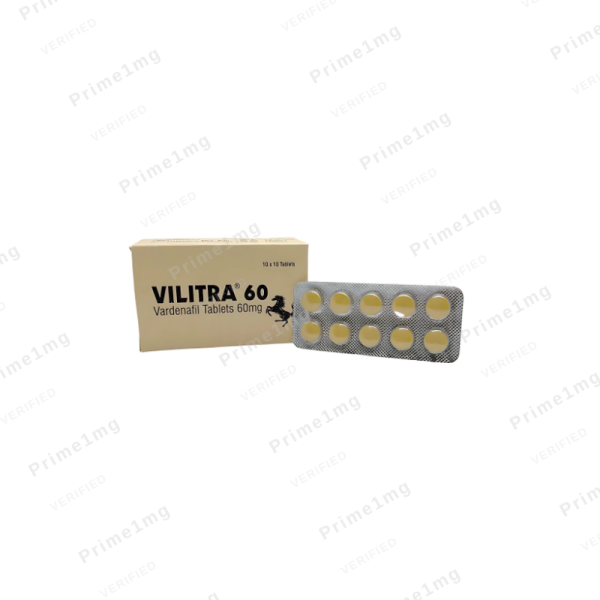
- Vardenafil (Levitra): Similar to sildenafil in onset and duration. Some research suggests it may work slightly better for men with diabetes [14].
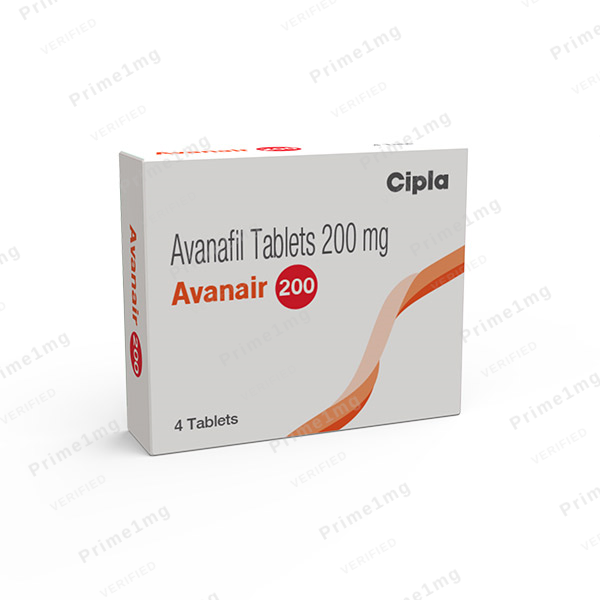
- Avanafil (Stendra): The newest option. Can work in as little as 15 minutes and tends to have fewer reported side effects than the others [14].
Side effects are usually mild: headache, flushing, stuffy nose, occasional indigestion. The one real danger: these drugs are not safe to combine with nitrates (used for chest pain), because that combination can cause a dangerous crash in blood pressure.
These aren't experimental. They're recommended by the American Urological Association, NICE, and the European Association of Urology, backed by decades of clinical data, and used safely by hundreds of millions of men worldwide.
If you're looking at this route, it helps to understand the available ED treatment options and talk through them with a healthcare provider to find the right fit.
Other Medical Treatments
When oral medications aren't effective or aren't the right fit, there are other solid options:
- Penile injections: Medications like alprostadil are injected directly into the side of the penis with a very fine needle. It sounds intimidating, but most men report minimal discomfort and very reliable results. They work within 10 to 15 minutes [1].
- Vacuum erection devices: A cylinder goes over the penis and a pump creates a vacuum that draws blood in. A ring at the base keeps it there. Works immediately, no medication needed - and available on NHS prescription [1].
- Testosterone replacement therapy: If blood tests confirms low testosterone, replacement therapy - via gel, injection, or patches - can improve both desire and erectile function. Results usually show up within four to six weeks [9].
- Shockwave therapy (LiSWT): A newer non-invasive treatment using low-intensity sound waves to stimulate new blood vessel growth in the penis. Early evidence is promising, especially for vascular ED, though it's not universally available yet [1].
- Penile implants: For men who don't respond to other treatments, a surgically placed implant delivers reliable, on-demand erections. Modern implants are discreet and don't affect sensation, urination, or orgasm. Satisfaction rates among men and their partners top 90% [15].
Psychological Treatment
When the root cause is primarily psychological - or when anxiety is stacking on top of a physical issue - professional support can make a dramatic difference:
- Cognitive Behavioural Therapy (CBT): The most evidence-backed approach for performance anxiety. CBT helps identify and reframe the thought patterns driving the anxiety cycle. A lot of men see meaningful improvement in 8 to 12 sessions [10].
- Sex therapy: A specialised form of therapy that works through sexual difficulties in the context of a relationship. Often involves both partners, with a focus on communication, taking the pressure off performance, and rebuilding intimacy at a pace that works.
- Couples counselling: When relationship strain is part of the picture, dealing with it directly tends to improve the sexual difficulties as a secondary benefit.
Natural Approaches: What Works and What Doesn't
The internet is flooded with "natural cures" for ED. Some have real evidence behind them. Most don't. Here's an honest breakdown:
Approaches With Evidence
- Regular aerobic exercise: As covered above - the single most effective natural intervention, with strong clinical backing [8][12].
- Mediterranean diet: Consistently linked to better erectile function in large-scale studies [2].
- Pelvic floor exercises: Clinically proven in randomised trials [8].
- Weight loss: Directly improves vascular and hormonal function [13].
- Stress reduction: Mindfulness, meditation, and breathing techniques can dial down sympathetic nervous system activation. The physiological mechanism is solid even if large ED-specific trials are limited.
- L-arginine: An amino acid the body uses to make nitric oxide - the molecule that relaxes blood vessels and makes erections possible. Small studies show modest benefit, especially when combined with pycnogenol. The evidence is limited but not without basis [16].
Approaches Without Reliable Evidence
- Herbal supplements marketed as "natural Viagra": Products with horny goat weed, tongkat ali, maca root, and similar ingredients are everywhere, but rigorous clinical evidence for them is thin to nonexistent. Some may contain undisclosed pharmaceutical ingredients, which is a real safety concern [17].
- Acupuncture: Some small studies show possible benefit, but systematic reviews have found the evidence too weak to recommend it [17].
- DHEA supplements: Mixed results in research. May offer modest benefit for men with confirmed low DHEA levels, but shouldn't be taken without medical guidance.
Honestly, no natural approach on its own will reliably fix moderate to severe ED. But lifestyle changes are the foundation that makes everything else work better. A man taking sildenafil who's also exercising, eating well, and managing stress is going to get better results than someone relying on the pill alone.
When Should You See a Doctor?
Short answer: sooner than you think.
Talk to a healthcare provider if [1][6]:
- Erectile difficulties have been going on for more than a few weeks
- The problem is causing you distress, anxiety, or relationship strain
- You've noticed fewer morning or spontaneous erections
- You have cardiovascular risk factors - high blood pressure, diabetes, smoking, family history, obesity
- You're on a medication that might be contributing
- You're also experiencing lower sexual desire alongside the erectile difficulties (which could point to a hormonal issue)
And if you're taking an ED medication and get a painful erection lasting more than four hours, go to A&E immediately. That's priapism, and it needs urgent treatment to avoid permanent damage [1].
Your GP is the right first port of call. They can refer you to a urologist or sexual health clinic if needed - or find your nearest NHS sexual health service at nhs.uk/service-search/sexual-health.
The Real Cost of Silence
We've covered the medical side. But it's worth spending a moment on what staying silent actually costs people - not in money, but in the rest of their lives.
Research from the Journal of Sexual Medicine found that among men with persistent erectile difficulties, 72% reported a significant loss of self-esteem, 64% dealt with generalised anxiety, 48% started avoiding intimate situations entirely, and 29% met the criteria for clinical depression [10].
Relationships take a quiet beating too. Studies have found that when a male partner's ED goes untreated for six months or more, communication around intimacy drops sharply and overall relationship satisfaction follows it down [18].
And behind all those numbers is a pattern most men with ED would recognise: the slow withdrawal, the excuses to avoid closeness, the growing distance from the person who matters most, the creeping sense that something fundamental is broken.
None of that has to be the story. Not anymore.
A Final Word
If you've read this far and recognised yourself in some of this, three things are true: you're not broken, you're not alone, and this doesn't have to be permanent.
Erectile dysfunction is common, well understood, and highly treatable. The science is solid, the options are real, and men who seek help get results - overwhelmingly.
The hardest part is usually the first step, whether that means making a doctor's appointment this week, having an honest conversation with your partner tonight, or just finally admitting to yourself how much this has been weighing on you.
Your sexual health is part of your overall health. It deserves the same honesty, the same attention, and the same willingness to act. And in some cases, addressing ED might uncover cardiovascular risks that end up saving your life.
You don't have to figure this out on your own. And you definitely don't have to accept it as permanent.
References
- Cleveland Clinic. Erectile Dysfunction. clevelandclinic.org. Reviewed 2024.
- Feldman HA, Goldstein I, et al. Impotence and its medical and psychosocial correlates: results of the Massachusetts Male Aging Study. Journal of Urology. 1994;151(1):54-61.
- Capogrosso P, Colicchia M, et al. One patient out of four with newly diagnosed erectile dysfunction is a young man. Journal of Sexual Medicine. 2013;10(7):1833-1841.
- Kubin M, Wagner G, Fugl-Meyer AR. Epidemiology of erectile dysfunction. International Journal of Impotence Research. 2003;15(1):63-71.
- NICE. Clinical Knowledge Summary: Erectile dysfunction. National Institute for Health and Care Excellence. Updated 2024.
- Vlachopoulos CV, et al. Prediction of cardiovascular events and all-cause mortality with erectile dysfunction. Journal of the American College of Cardiology. 2010;55(19):2025-2035.
- Kouidrat Y, et al. High prevalence of erectile dysfunction in diabetes: a systematic review and meta-analysis. Diabetic Medicine. 2017;34(9):1185-1192.
- Harvard Health Publishing. 5 natural ways to overcome erectile dysfunction. Harvard Medical School. Updated 2024.
- Bhasin S, et al. Testosterone therapy in men with hypogonadism: an Endocrine Society clinical practice guideline. Journal of Clinical Endocrinology & Metabolism. 2018;103(5):1715-1744.
- Rosen RC, Fisher WA, et al. The multinational Men's Attitudes to Life Events and Sexuality (MALES) study. Current Medical Research and Opinion. 2004;20(5):607-617.
- European Association of Urology. Guidelines on Male Sexual Dysfunction. 2023.
- Silva AB, et al. Physical activity and exercise for erectile dysfunction: systematic review and meta-analysis. British Journal of Sports Medicine. 2017;51(19):1419-1424.
- Esposito K, et al. Effect of lifestyle changes on erectile dysfunction in obese men: a randomised controlled trial. JAMA. 2004;291(24):2978-2984.
- Hatzimouratidis K, et al. Pharmacotherapy for erectile dysfunction: recommendations from the Fourth International Consultation for Sexual Medicine. Journal of Sexual Medicine. 2016;13(4):465-488.
- Wilson SK, et al. Long-term survival of inflatable penile prostheses: single surgical group experience with 2,384 first-time implants. Journal of Sexual Medicine. 2007;4(4):1074-1079.
- Stanislavov R, Nikolova V. Treatment of erectile dysfunction with pycnogenol and L-arginine. Journal of Sex & Marital Therapy. 2003;29(3):207-213.
- Ernst E, Pittler MH. Yohimbine for erectile dysfunction: a systematic review and meta-analysis of randomised clinical trials. Journal of Urology. 2002;159(2):433-436.
- Byers ES, Rehman US. Sexual well-being and relationship satisfaction in couples dealing with sexual difficulties. Journal of Sexual Medicine. 2021;18(3):547-558.