Performance anxiety is one of the most underreported drivers of erectile dysfunction — yet it rarely gets addressed honestly. Most clinical conversations focus on the physical: blood flow, PDE5 inhibitors, dosage. But for a significant proportion of men, the anxiety of "will it work?" is as disabling as any vascular issue. And here is the part nobody tells you: the timing requirements of standard ED medications actively feed that anxiety.
If you have been prescribed sildenafil or tadalafil, you have encountered the instruction: take it 30 to 60 minutes before sexual activity. For many men, that window — spent waiting, wondering, trying not to think about whether the pill is "working" — is itself a trigger. The medication meant to help you relax creates a new layer of performance pressure.
This article examines the relationship between performance anxiety and ED, explains why onset time is not a trivial pharmacological footnote, and outlines why faster-acting treatments are clinically meaningful for men in this specific situation.
Understanding Performance Anxiety as a Cause of Erectile Dysfunction
Erectile dysfunction has two broad categories of cause: organic (physical) and psychogenic (psychological). In clinical practice, the distinction is rarely clean — most cases involve both. But performance anxiety sits squarely in the psychogenic category and is particularly prevalent among younger men and those in new or high-pressure relationships.
The mechanism is well understood. During sexual arousal, the body releases nitric oxide (NO) into the smooth muscle tissue of the penis. This triggers the production of cyclic guanosine monophosphate (cGMP), which relaxes smooth muscle, dilates blood vessels, and allows increased blood flow — the physiological foundation of an erection. Anxiety activates the sympathetic nervous system — the fight-or-flight response. Sympathetic activation releases noradrenaline and adrenaline, which cause vasoconstriction — the precise opposite of what is needed for an erection [1].
In short: anxiety constricts the blood vessels that need to dilate. One episode of ED caused by performance anxiety creates fear of the next episode — which creates more anxiety — which causes more ED. This negative feedback loop is well documented in psychosexual medicine and is notoriously resistant to simple reassurance [2].
The 60-Minute Wait: How Medication Timing Creates a New Anxiety Trigger
When a man takes a standard ED medication and waits for it to act, several psychological processes unfold simultaneously:
- Hyper-monitoring: Every physical sensation becomes evidence for or against the medication working. This constant self-assessment is itself a form of anxiety that competes directly with sexual arousal.
- Implicit scheduling pressure: The window creates an internal clock. Sexual activity must happen within a specific time frame, transforming intimacy into a managed event rather than a natural one.
- Fear of wasted effort: Men who have experienced the medication appearing not to work — sometimes simply because the anxiety during the wait window was overwhelming — develop secondary anxiety about whether this dose will be the one that fails again.
- Elimination of spontaneity: Spontaneous encounters are often lower anxiety precisely because they leave no room for anticipatory worry. A 30 to 60-minute planning requirement makes genuine spontaneity structurally impossible.
Research into PDE5 inhibitor use patterns found that over 40% of men reported significant anxiety specifically during the waiting period before the medication was expected to act — and a substantial proportion had discontinued treatment entirely because of this experience, despite having a physically effective medication [3].
Why Onset Time Varies Between ED Medications
All four clinically approved PDE5 inhibitors — sildenafil, tadalafil, vardenafil, and avanafil — work through the same fundamental mechanism: they inhibit the PDE5 enzyme, allowing cGMP to accumulate and sustaining the physiological response to sexual stimulation. The differences in onset come down to pharmacokinetics: absorption rate, protein binding characteristics, time to peak plasma concentration, and how significantly food delays absorption.
Sildenafil
Sildenafil — the active ingredient in the original branded Viagra — has a typical onset of 30 to 60 minutes under fasting conditions. A high-fat meal significantly delays absorption, extending onset to 90 minutes or longer while also reducing peak plasma concentration [4]. Duration is approximately 4 to 6 hours. Its selectivity for PDE5 over other phosphodiesterase subtypes is moderate, which partly accounts for side effects including visual disturbances from PDE6 inhibition in retinal tissue and facial flushing.
Tadalafil
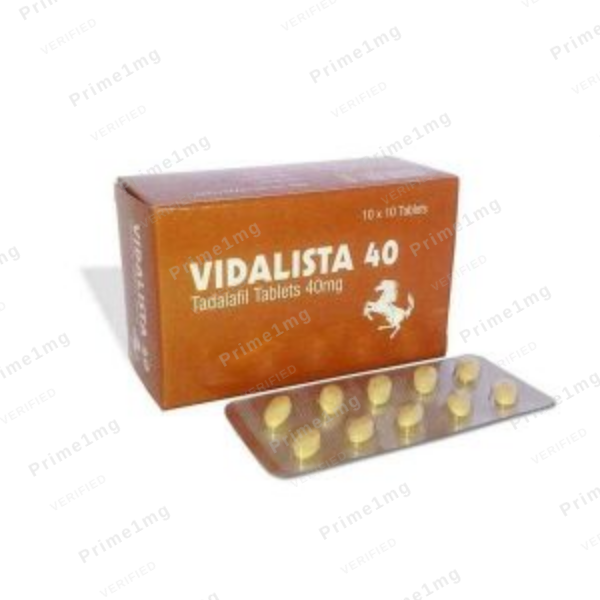
Tadalafil has a similar on-demand onset of 30 to 60 minutes, but is far less affected by food. Its defining clinical feature is duration — up to 36 hours — which is why it is also available as a daily low-dose continuous regimen. The extended window genuinely removes planning pressure over longer periods, but it does not reduce the performance anxiety associated with the initial 30 to 60-minute wait when used on-demand [5].
Vardenafil
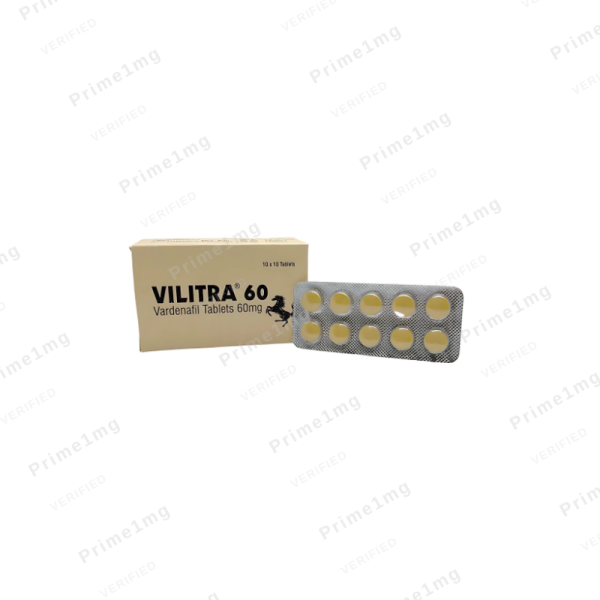
Vardenafil has an onset broadly similar to sildenafil — typically 25 to 60 minutes — with moderate food sensitivity. It offers no meaningful improvement over sildenafil on onset time and shares a comparable selectivity profile.
Avanafil
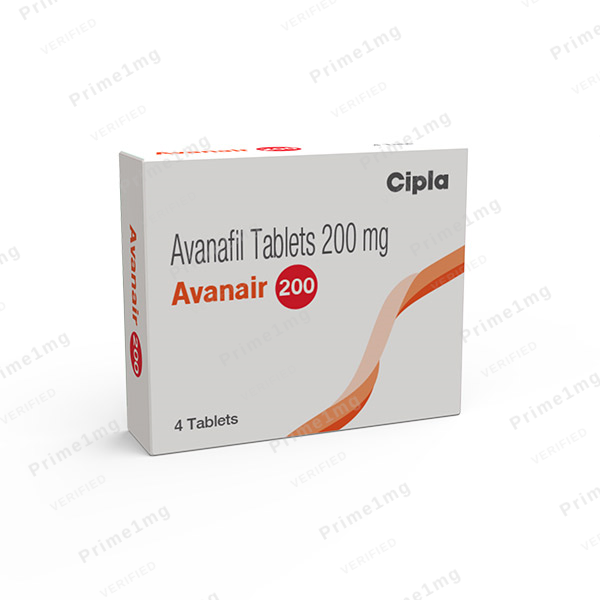
Avanafil is the newest approved PDE5 inhibitor and was specifically engineered to address the onset and selectivity limitations of first-generation drugs. Clinical trials consistently document onset as early as 15 minutes, with the majority of men responding within 15 to 30 minutes [6]. It is minimally affected by food. Crucially, avanafil has significantly higher selectivity for PDE5 over PDE1, PDE6, and PDE11 than older inhibitors — which translates directly to faster clinical action and a substantially cleaner side effect profile [7].
| Medication | Onset Time | Duration | Food Effect | PDE5 Selectivity |
|---|---|---|---|---|
| Sildenafil | 30-60 min | 4-6 hours | Significant | Moderate |
| Tadalafil | 30-60 min | Up to 36 hours | Minimal | Moderate |
| Vardenafil | 25-60 min | 4-5 hours | Moderate | Moderate |
| Avanafil | 15-30 min | 6 hours | Minimal | High |
The Clinical Case for Faster Onset in Performance Anxiety
For men whose ED has a significant psychogenic component, a faster-acting treatment is not merely a convenience — it is a clinically meaningful difference in how the treatment interacts with the underlying problem.
1. A Shorter Anxiety Window
Reducing the pre-activity wait from 60 minutes to 15 to 30 minutes directly reduces the time available for anticipatory anxiety to accumulate. In psychosexual terms, you are shortening exposure to the stressor — the uncertain wait — before the positive experience can begin to counteract the anxiety cycle [8]. This is not a trivial distinction for men who experience significant anticipatory anxiety before sex.
2. Restored Spontaneity
Men with performance anxiety often report better outcomes in spontaneous situations, where the absence of anticipation prevents anxiety from building in the first place. A 15-minute window is close enough to spontaneous that the planning burden becomes minor. A 60-minute window is not. This practical difference has real consequences for quality of life and relationship dynamics — factors that clinical trials rarely measure but that determine whether men stay on treatment.
3. Food Flexibility
Sildenafil's significant interaction with food means that eating before sex — a natural and common scenario — can reduce efficacy substantially and unpredictably. This adds another variable to manage and another potential explanation when the medication appears not to work. Avanafil's minimal food sensitivity removes this variable entirely, allowing men to eat normally without calculating medication timing around meals.
4. Cleaner Side Effect Profile
The higher PDE5 selectivity of avanafil means substantially fewer off-target effects. The visual disturbances associated with sildenafil arise from its inhibition of PDE6 in retinal tissue. The muscle aches occasionally reported with tadalafil relate to PDE11 inhibition in muscle tissue. Both are significantly reduced with avanafil [9]. Side effects matter specifically for performance anxiety because they create additional reasons to feel apprehensive about taking the medication — and fewer side effects improve both treatment adherence and psychological confidence in the drug.
Who Benefits Most From a Fast-Acting ED Treatment
A faster-acting PDE5 inhibitor is particularly worth discussing with your healthcare provider if any of the following apply to you:
- You experience significant anticipatory anxiety during the wait period before sexual activity
- You have stopped using ED medication because the waiting period felt psychologically counterproductive
- Your ED appears to worsen on occasions when you have taken a pill and are actively aware of waiting for it to work
- You regularly eat meals before sex and find your current medication unpredictable as a result
- You are in a new relationship where pressure to perform is heightened
- You have found older-generation PDE5 inhibitors physically effective but psychologically disruptive in practice
- You want a treatment that enables closer-to-spontaneous intimacy without the need for clinical-feeling pre-planning
Frequently Asked Questions
Does taking an ED pill cause performance anxiety?
The medication itself does not cause performance anxiety. But the planning requirements, the monitoring behaviour that follows taking a pill, and any side effects can all contribute to psychological pressure around sexual activity. Faster onset and a cleaner side effect profile reduce these contributions significantly.
Is avanafil the fastest-acting oral ED treatment available?
Among clinically approved PDE5 inhibitors, yes. Avanafil has the fastest documented onset in controlled clinical trials, with responses recorded in as little as 15 minutes. No other currently approved oral ED treatment matches this consistently across trial data.
Does psychogenic erectile dysfunction respond to medication?
Yes, and often very well. PDE5 inhibitors act on the physiological pathway regardless of whether the ED is primarily physical or psychological in origin. For psychogenic ED, medication can break the failure cycle by providing reliable function while confidence rebuilds. A fast-acting, low-side-effect option lowers the psychological barrier to consistent use.
Can avanafil be taken with food?
Yes. Avanafil can be taken with or without food, including with a light meal. A high-fat meal may marginally delay onset but does not substantially affect overall efficacy — a meaningful practical advantage over sildenafil, particularly in real-world use.
What is the maximum dose of avanafil?
Avanafil is available in 50mg, 100mg, and 200mg strengths. The 200mg dose is the maximum and is typically used when lower doses provide insufficient effect. Dosing should always be guided by a healthcare provider based on individual response and tolerability.
Final Thoughts
Performance anxiety and erectile dysfunction form a well-documented negative feedback loop that is difficult to break through willpower alone. Standard first-generation PDE5 inhibitors — while clinically effective — require a 30 to 60-minute planning window that extends the time available for anticipatory anxiety to build, structurally eliminates spontaneity, and in many cases leads men to abandon treatment that would otherwise benefit them.
Avanafil's clinical profile — 15 to 30-minute onset, minimal food interaction, high PDE5 selectivity, and a reduced side effect burden — makes it specifically well-suited to men whose ED has a significant psychological component. It is not a substitute for professional support where underlying anxiety needs addressing, and it still requires sexual stimulation to work. But as a pharmacological tool, it removes several of the key variables that make performance anxiety harder to manage around medication use.
Avanair 200 Mg (Avanafil 200mg) — manufactured by Sunrise Remedies — is a fast-onset PDE5 inhibitor available at Prime1mg with discreet packaging and competitive pricing. Always consult your doctor before starting any ED treatment.
References
- Bancroft J, Janssen E. The dual control model of male sexual response: a theoretical approach to centrally mediated erectile dysfunction. Neuroscience and Biobehavioral Reviews. 2000;24(5):571-579.
- Rowland DL, Cooper SE. Practical aspects of sexual medicine — what men need from sex to maintain good sexual health. Journal of Men's Health. 2011;8(2):90-97.
- Althof SE, et al. Self-reported sexual quality of life and treatment satisfaction in men with erectile dysfunction. International Journal of Impotence Research. 2003;15(5):347-351.
- Males JL, et al. Pharmacokinetics and tolerability of sildenafil citrate: a novel selective inhibitor of cyclic guanosine monophosphate PDE5 in man. British Journal of Clinical Pharmacology. 2002;53(3):255-263.
- Forgue ST, et al. Tadalafil pharmacokinetics in healthy subjects. British Journal of Clinical Pharmacology. 2006;61(3):280-288.
- Goldstein I, et al. Avanafil for the treatment of erectile dysfunction: a multicenter, randomized, double-blind study in men with diabetes mellitus. Mayo Clinic Proceedings. 2012;87(9):843-852.
- Hatzimouratidis K, et al. Guidelines on male sexual dysfunction: erectile dysfunction and premature ejaculation. European Urology. 2010;57(5):804-814.
- Perelman MA. The sexual tipping point: a mind and body model for sexual medicine. Journal of Sexual Medicine. 2009;6(3):629-632.
- Gur S, et al. An assessment of phosphodiesterase type 5 inhibitors for the treatment of erectile dysfunction. Expert Opinion on Pharmacotherapy. 2011;12(12):1921-1935.